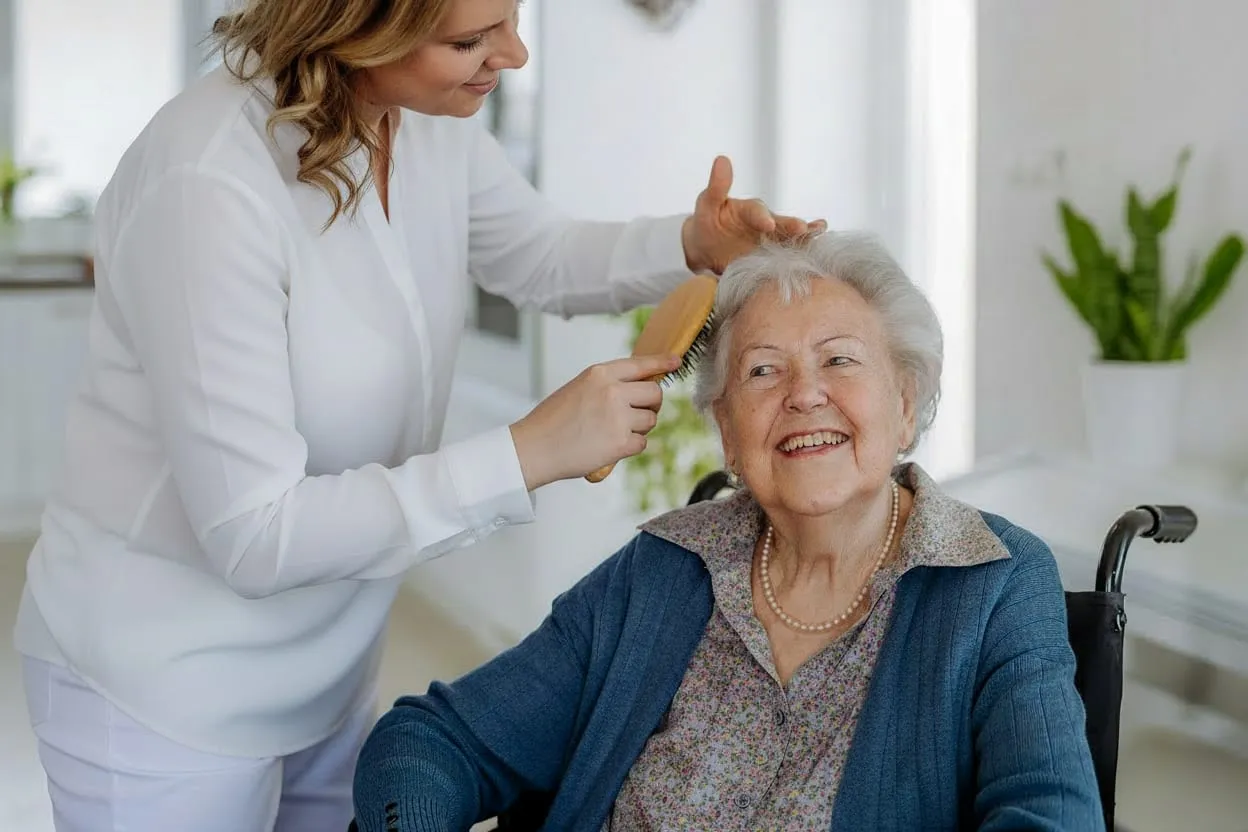
Daily living and health
Dressing
Dressing, as an activity of daily living, means choosing clothes, putting them on and taking them off, including fasteners and shoes. Pain, stiffness, weakness, or memory loss can make it hard. Caregivers can lay out clothes, give cues, or help with buttons, zippers, and shoes.
Why it matters for your family
Trouble dressing can show up as mismatched clothes, the same outfit worn for days, or long delays getting ready. Causes range from arthritis to dementia. Helping a person keep as much control as possible protects dignity. Offer two outfit choices, use clothes with elastic waists or large buttons, and allow extra time. A common mistake is rushing or doing everything for the person. Doing too much can speed loss of skills. Dressing help is part of the personal and advanced companion care HomeCare.com describes, alongside grooming and mobility. A doctor or occupational therapist can suggest tools.
Source: acl.gov
Read more: Personal and advanced care
Related terms
- Activities of daily living (ADLs)Activities of daily living (ADLs) are the basic self-care tasks people do each day.
- Personal carePersonal care is hands-on help with daily self-care, such as bathing, dressing, grooming, toileting, eating, and moving around.
- Dementia careDementia care is support for people with memory loss and other thinking problems that disrupt daily life.
- Mobility assistanceMobility assistance is help with moving around, such as standing up, walking, using stairs, and getting in and out of a bed, chair, or car.
- BathingBathing, as an activity of daily living, means washing the body by sponge bath, tub, or shower, and getting in and out safely.
- ToiletingToileting, as an activity of daily living, means getting to and from the toilet, using it, and cleaning up afterward.