Dementia Care at Home
Calm routines, gentle cognitive support, and close attention to safety, delivered by non-medical caregivers in the home your loved one knows.
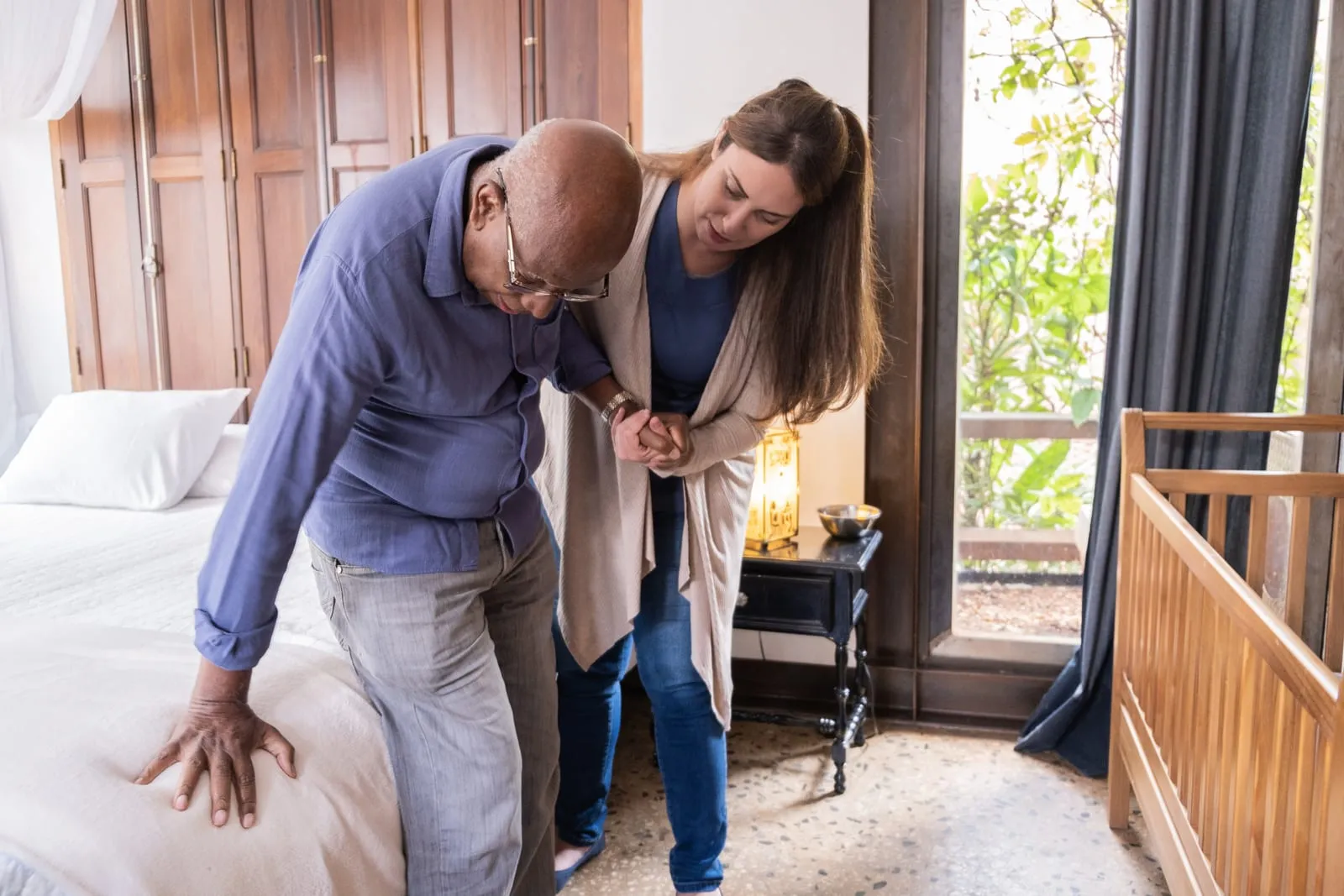
Dementia care at home is non-medical support that helps a person with memory loss live safely in familiar surroundings. Caregivers offer memory-stimulating activities, structured routines, and fall and wandering safety. HomeCare.com does not provide medical treatment or give medication, and it is not a memory care facility.
Cognitive support and safety at home
Dementia care at HomeCare.com falls under advanced companion care (Level Two). It stays non-medical.
Cognitive support
Memory-stimulating activities and structured routines for dementia or Alzheimer's.
Wandering safety
Monitoring and reducing the chance of wandering, and keeping the home safe.
Fall-risk safety
Monitoring and reducing fall risk, with walking and transfer help.
Hands-on personal care
More hands-on help with bathing, toileting, and hygiene.
Medication reminders
Prompts to take medication on time (not administered).
Ways families arrange dementia care
Live-in care
One caregiver stays in the home, which suits cognitive decline with continuous but not constant needs.
24-hour care
Rotating caregivers give uninterrupted coverage when nights are unsettled.
Hourly visits
Families choose visits and hours with no minimums, so care can start small.
Respite for family
Relief for family caregivers while their loved one still receives quality care.
Signs home care may fit
Memory changes
Your loved one forgets routines, appointments, or meals.
Safety worries
There have been falls, near misses, or wandering.
Family strain
Relatives are tired and need dependable help.
Wish to stay home
Familiar surroundings matter to your loved one.
What this care does not include
Dementia care here is non-medical. Caregivers do not administer medication, treat wounds, or provide nursing or therapy. HomeCare.com is not a memory care facility.
No medical treatment
Caregivers give no nursing, wound care, or therapy.
Reminders only
Caregivers remind but do not administer medication.
Care in your home
Care takes place in your loved one's home, not a residential facility.
Dementia home care vs. memory care facility
Non-medical care in familiar surroundings
- Setting
- Your loved one's own home.
- Support
- One caregiver or a rotating team, matched to a care plan.
- Medical care
- None from HomeCare.com. Medication reminders only.
- Best for
- People who do best with familiar surroundings and one-on-one attention.
Residential community for memory loss
- Setting
- A residential community with secured areas, built for people with memory loss.
- Support
- Staff on site around the clock, with group activities and meals.
- Medical care
- Varies by community. Many offer help with medication.
- Best for
- People who need a secured setting or cannot safely stay at home.
Quick facts.
- Level of care
- Advanced companion care (Level Two), which includes cognitive support.
- Safety focus
- Fall-risk monitoring and wandering prevention.
- Schedules
- Live-in, 24-hour, or visits with no minimums and no contracts.
- Not included
- Medical treatment, medication administration, or memory care facility services.
Plan your parent's care.
We'd suggest
Structured routines, memory activities and safety for a parent living with memory loss.
about $7,583/month
10 hrs x 5 days x 52 weeks / 12 x $35/hr (U.S. median)
Market medians from the CareScout Cost of Care Survey 2025, not HomeCare.com prices. A care advisor prices your actual schedule.
Dementia care: questions families ask.
Read next
Terms: Dementia care, Dementia, Memory care, Wandering, Fall risk, Sundowning
Can a person with dementia stay at home?
Often, yes, with the right support and a safe home. Many people with dementia do well in familiar surroundings. Non-medical caregivers can help with routines, personal care, and safety. Needs change over time, so review the plan often. Talk with your loved one's doctor about medical needs.
What does dementia home care include?
It includes memory-stimulating activities, structured routines, and companionship. Caregivers also help with bathing, toileting, meals, and walking, and they work to reduce fall and wandering risk. They give medication reminders only. Medical treatment is not part of the service, and families can pair it with a doctor's care.
When is memory care needed?
Families often consider memory care when a person cannot safely stay at home, even with help. Signs include repeated wandering, risk of harm, or needs that exceed what home care can safely cover. A doctor and a care advisor can help you weigh the options. Our guide compares home care with facilities.
How do you prevent wandering?
Prevention combines supervision, routines, and a safe home. Caregivers watch for signs of restlessness and keep a steady daily schedule. Door safety measures and a plan for emergencies also help. Read our article on preventing dementia wandering for practical steps families can try.
Do caregivers need dementia training?
HomeCare.com does not state dementia training requirements on its public pages. Every caregiver it refers must pass a thorough background check. Ask your care advisor about a caregiver's experience with dementia before you choose, and say what behaviors you want help with.
How much does dementia home care cost?
HomeCare.com does not publish its rates here, so a care advisor will go over costs with you. Cost depends on the hours and the schedule you choose. For market context, see our cost of home care page, which uses CareScout 2025 data for each state.
Dementia care near your parent.
Other kinds of care.